Origins
Tradition places the first settlement on the Ravello ridge in late Roman times, when people from the plain sought safety in the hills. Firmer history begins with the rise of Amalfi, whose maritime republic, from the ninth century, traded with Byzantium, North Africa and the Levant.
The medieval golden age
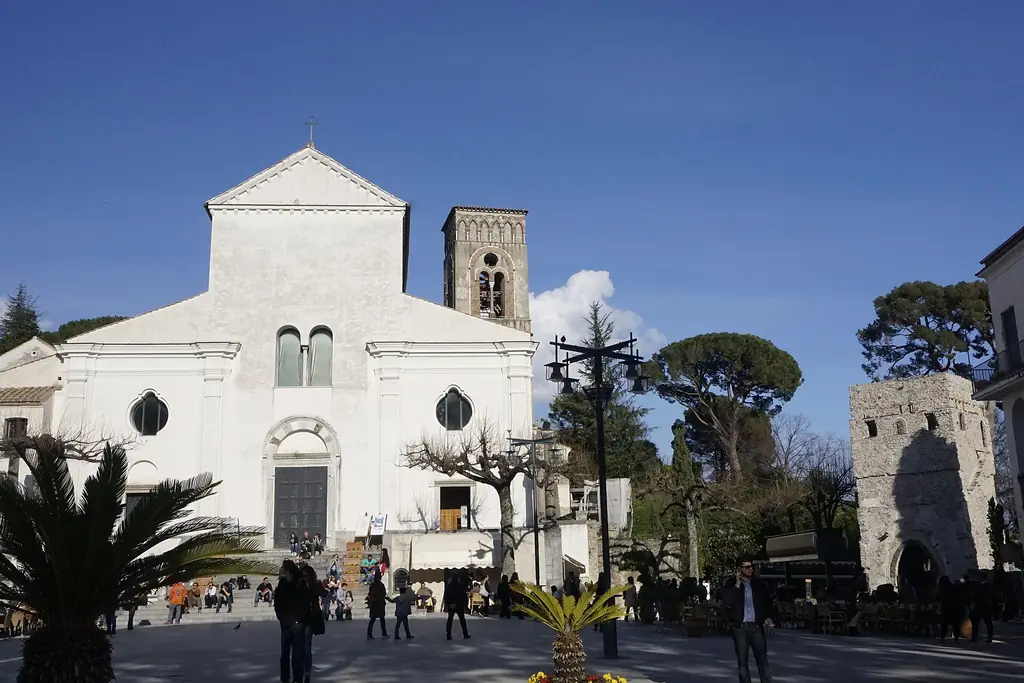
Ravello prospered within the Amalfi world. Its families grew rich from trade and from cloth and wool production, and built palaces, towers and churches. In 1086 Ravello became the seat of a bishop, a sign of its importance, and the cathedral was founded the same year. The Rufolo family's villa and the town's many churches date from these centuries.
Decline
From the twelfth century the fortunes of the coast changed: Amalfi was attacked by Pisa in 1135 and sacked in 1137, trade routes moved and the population fell. Ravello became a quiet hill town of farmers, with grand buildings slowly falling into ruin.
Rediscovery
In the nineteenth century, travellers on the Grand Tour began to climb up from Amalfi. Francis Nevile Reid restored Villa Rufolo, Wagner visited in 1880, and in the early twentieth century Ernest Beckett rebuilt Villa Cimbrone. Writers, painters and musicians followed throughout the century.
Ravello today
In 1997 the Amalfi Coast, Ravello included, was inscribed on the UNESCO World Heritage List as a cultural landscape. Ravello is now known worldwide for its festival and gardens, yet it remains a small town of a few thousand residents.
Questions
Why is Ravello called the city of music?
Because of its link with Wagner, who visited Villa Rufolo in 1880, and the long tradition of concerts that grew into the Ravello Festival.
Is Ravello a UNESCO site?
Yes. It is part of the Costiera Amalfitana World Heritage Site, inscribed in 1997.