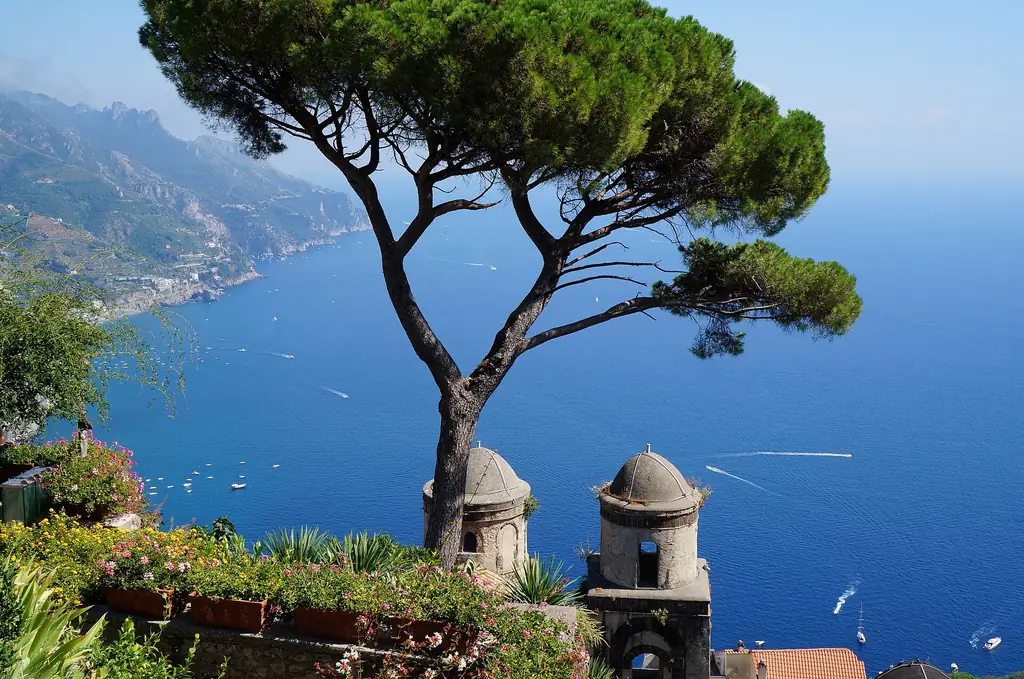
A merchant family's palace
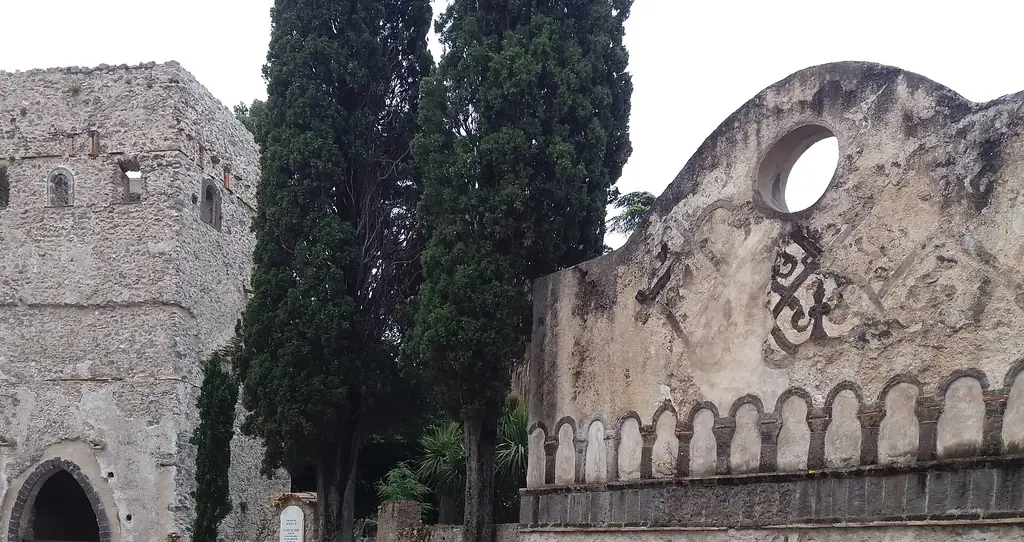
Villa Rufolo was built in the 13th century by the Rufolo family, merchants and bankers who grew rich in the years when Ravello traded across the Mediterranean as part of the Amalfi world. The family's wealth was a statement: towers, a cloister with interlaced arches in a style that mixes Arab and Norman ideas, and gardens set on terraces above the sea.
After centuries of decline, the villa was bought in the nineteenth century by the Scottish botanist Francis Nevile Reid, who restored the buildings and replanted the gardens. Most of what you see today owes its shape to that restoration.
Wagner and the garden of Klingsor
In May 1880 Richard Wagner visited the villa while working on Parsifal. He recognised in its gardens the enchanted garden of Klingsor in the second act, and wrote so in the visitors' book. That visit is the origin of Ravello's identity as the "city of music" and, decades later, of the Ravello Festival.
What to see
- The entrance tower, which you pass through from Piazza Duomo.
- The Moorish cloister, a small courtyard with layered arches.
- The Torre Maggiore, the main tower, which can usually be visited and holds a small display.
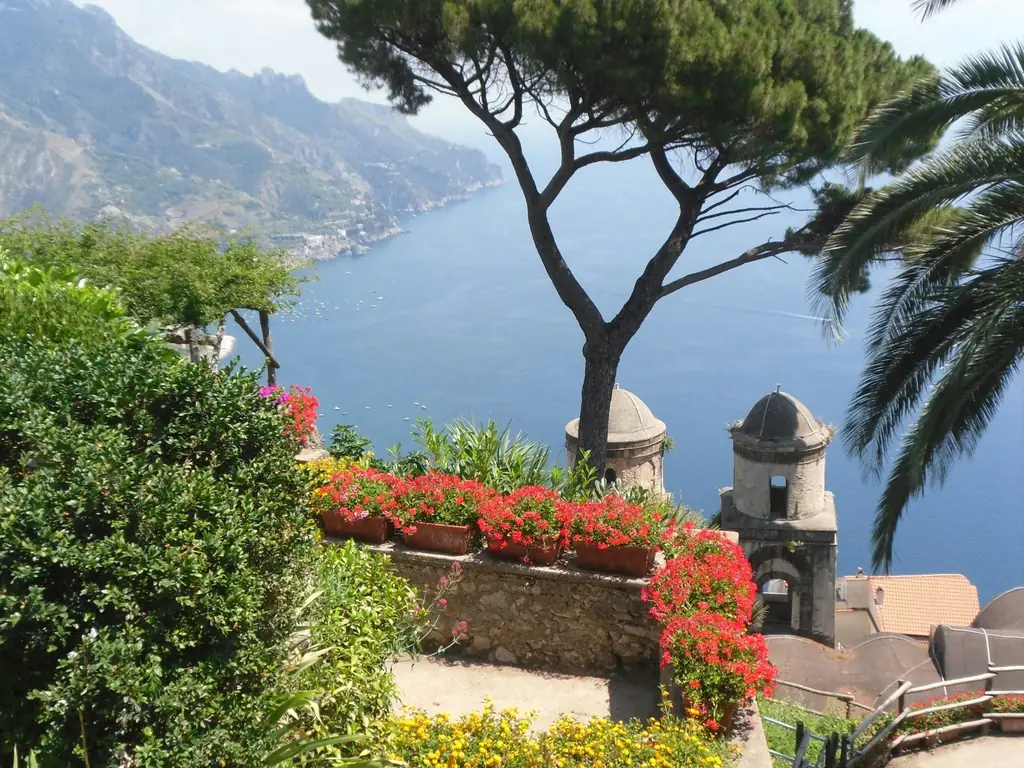
- The upper and lower gardens, with flower beds planted in season and the view over the Gulf of Salerno.
- The Belvedere, the terrace where the festival stage is built each summer.
Practical tips
- Opening hours change with the season and on concert days. Check the Fondazione Ravello website before you go.
- Arrive at opening time in summer: the gardens are calmer and the light is softer.
- In festival season, parts of the Belvedere are occupied by the stage. If your main goal is photography, spring and autumn are better.
- The villa is next to the cathedral, so the two make an easy first hour in town.
Questions
Is Villa Rufolo worth visiting?
Yes, especially for the view from the lower garden and the history of the Wagner connection. Allow about an hour.
Where is the Ravello Festival held?
The main concerts take place on the Belvedere of Villa Rufolo, a stage that projects over the sea. Other venues in town host smaller events.
Do I need to book Villa Rufolo in advance?
For an ordinary visit you usually buy a ticket at the entrance. For concerts and special events, book through the official channels.